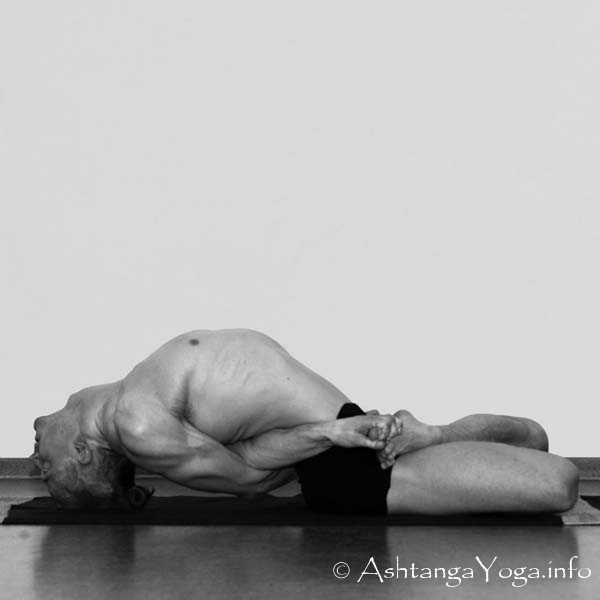
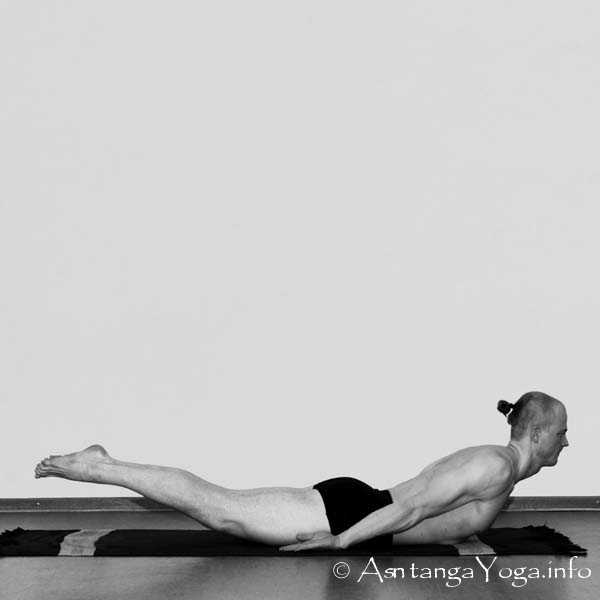
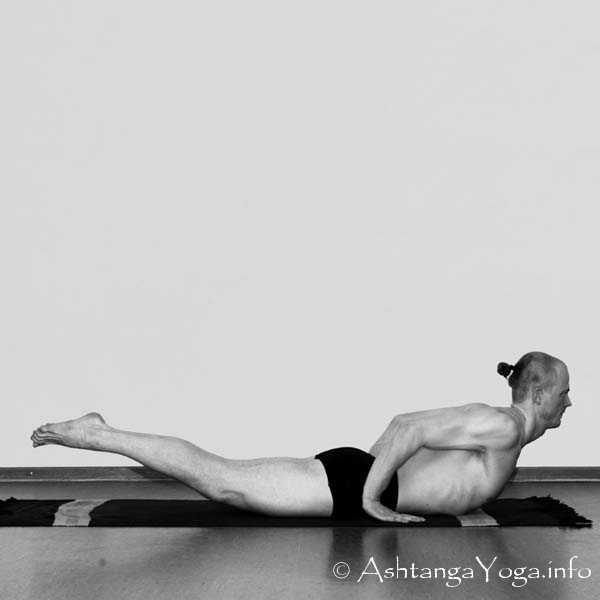
ashtangayoga.info).

ashtangayoga.info).
picture on left from travelblog.org). I had no idea where we were going, and neither did one of my friends, who ended up taking a road trip to temples she had already visited a month ago. On our way, she mentioned how road trips are very different here in India because you never get on an open road. Its true. In the states, you drive through town and then suddenly its only open road in front of you and you think, "Wow, here we go!" In India, you are driving slowly down roads, through ride fields, through back allies in obscure towns. I couldn't help but wonder how anyone could find there way to the same places we were going because there were so many unmarked ally ways that seemed to make up a substantial number of roads we travelled. The roads aren't always paved, are often muddy, and include many passersby and obstructions with a heart beat or many heart beats if you get caught in a heard of goats. I noticed on the windshield that there was a sticker that declared that this vehicle was adjusted to not go faster than 60. Really, it could not go faster than 60. Not that there was much of an opportunity with the cows and the muddy holes.
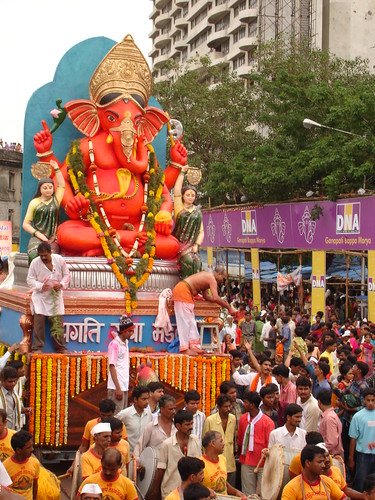
that some men toward the middle were carrying a large altar. My friends were very excited, craning to get a good picture of what they thought was Ganesh (the elephant-god who removes obstacles). (The photo on the left is from a Ganesh Festival in Mumbai that I found on google). Men from the crowd were pointing up at us and shouting something, I couldn't make out what. But something did seem strange, and I realized my feeling was right when I saw that it was not Ganesha at all that they were carrying, it was a dead man."Its a fucking dead man!" I said.
"what?"
"huh?"
"Its a fucking dead man!" I said again. Their cameras lowered. One of them really began to freak out.
"I've never seen a dead body before!" He shouted as I tried to shrug off his chin that was now resting on my shoulder as he tried to hide from the grey, sinking figure and the condemnation of an angry crowd.
"Its okay," the other girl said. I think she just kept repeating this.
As we watched, the old man sat under a canopy of flowers. He was covered from head to toe with garlands with only his sunken face peaking out from beneath.
Today we had the day off (its Saturday). We decided (slowly and unreliably until the last second) to pile into a van and drive to some waterfalls somewhere. From behind the window, at this safe distance, I feel like I'm watching life go by like a viewer in a cinema.
I thought about how there are so many things I can't tell you about what its like to be here. Its not just that I don't have the words to describe it; its that there aren't enough words. Sometimes you have to paint a picture, even if it means not everyone will understand the work. So much of being here is more than seeing and trying new things or interacting with new people. So much of it is an indescribable journey through what it means to be alive and in this world. My teacher used to say that in our yoga practice it is good to get right to the edge, right to your edge, and to keep pushing until you get there. This place is like that. Always confronting you with edges.
There are moments that freeze in time, moments when for just a second, you can see your body and realize that there is so much more. A man squatted on a small dirt hill in the middle of a bright green rice field overlooking more rice fields. He just sat there watching the sun and wind dance and flicker over the tips of green green blades of grass. Things can be so simple, so obvious, but we fail to see them.
In the Yoga Sutras translation by Satchidananda, he tells a simple story that I hope I get mostly right. I think that there is this guy who is trying to achieve enlightenment but he's having a hard time. So the God that is helping him suggests that he chant "Mara Mara" because he is standing in front of a tree (mara means tree). So he does. And before he knows it, "mara" transfoms in to "rama".
nt, Initiative, Adventure, Irresponsibility
The third month in Mysore is all about getting tired of saying "goodbye" and "hello" to people coming and going to or from Mysore, getting bored by the same restaurants that you frequent, being sad when that same restaurant is closed because of a holiday, being surprised to end up somewhere new, feeling rooted where you are, officially having a spot for your mat at the shala, not wanting to admit that you know how many days until you go home, not wanting to go home, and feeling reluctant to spend rupees on things hiked up to what you know and have seen is an inflated tourist price.
The buzz in my ears from my senses being overloaded by all that is India has slowly decreased over the last few months. I hadn't noticed this change until recently when I looked back with enough distance to notice that it was buzzing in the first place. But now that the noise has diminished to a quiet rumble, I've crawled out from beneath my pillow to see what the world looks like.
A useful tool when we are learning to meditate is instead of trying to focus on clearing the mind of all thoughts, you focus on one thing. For example, as a Catholic, when you are praying, you can use a rosary to keep your attention steady.
So what do we do when there is no longer something to focus on. How do you play soccer when the purpose is not to score a goal or win a point?
In practice, when you're not trying to show your practice to anyone (including yourself?), what do you focus on? Take into mind that when showing your practice, you are paying careful attention to technique. What then do you focus on? You've been running toward the beach, and then the water touches your toes and you stare across the vast stretch of sky and ocean. Your eyes jump from ship to swimmer, to bird. But when the waves have slowed and in that slow moment, there is nothing to focus on, how long can you stay in that state before the next distraction comes?
Here in Mysore, the social fire has cooled, the culture is now the norm, the weather has dulled, what then? Eat food. Watch TV and badly copied movies. Read books.
Yoga Sutra Satchidananda translation, of course:
The practice of concentration on a single subject [or the use of one technique] is the best way to prevent the obstacles and their accompaniments.
Its back to practice at the shala tomorrow from my 3 day holiday, although in many ways, the practice is never on holiday...
Sometimes I read the sutras or hear something of the sort and think, "the next time that happens, that will be how I react." Or, "Next time will be different." I remember this line in a Pema Chodron book about how a student told her how much she meant to call her, or to see her, but didn't feel it was the right time because she was falling to pieces. Pema Chodron just replied, "Who cares! Come as you are...everything will always be in pieces, so come now!" In this way, its like she's saying to stop worrying so much about the details or about stressing out about being the perfect practitioner. A person could go crazy obsessing about doing right by everything is out there. (I really was a vegan, organic, macrobiotic. It sucked.)
After being here is Mysore, I feel more and more that being here and studying at the shala and really giving my all to practice is the best thing for me. I dabbled in this or that activity just like many of the other shala students here in Mysore, but I admit that I can't be bothered to go to chanting, sanskrit, or music lessons. I'm not interested in a road trip, a transcendental meditation, or a massage course. I don't want to learn how to cook a sambar or to sing. I'm here to practice ashtanga at the shala and that's it. Its funny how simplicity can be so overwhelming.
In that same Satchidananda translation of the sutras he says, "Yoga practice is like an obstacle race; many obstructions are purposely put on the way for us to pass through. They are there to make us understand and express our own capacities. We all have that strength but we don't seem to know it...Once you put an obstacle to the flow by constructing a dam, then you can see its strength in the form of tremendous electrical power."
In A Long Way to the Floor, the author tells a story of how our "fight or flight" instinct comes into play during practice. Something brings us "pain" and then we begin to breathe fast, our bodies tense, and we squirm to get out of the pose as quickly as possible. But when we can relax, the pose is like a warm bath.
But what is pain? As I lied there, I could decide what to do with the sensation. Fight, or flight? I had to choose "neither". I had to find a way to step out of the instinct. I was paying these women to do this to me. I had to relax. I wouldn't die. But what is pain?
The ceiling was white. The florescent light was...fluorescent. The pain had a color. Down from bellow the navel, the pain had a long way to travel up my brain. Was the color I just felt purple with silver? Was it green with pale pink? My body and mind were lost in a boat in the ocean.
If this excruciating pain was something that I was willing to sit through, why did I panic in situations that didn't bring the same kind of pain? Like in back bends or hamstring stretches? My house mate and I talked about this for a while. She said pain is something that you are taught how to handle as a child. When something happens to you, you react to how your parents teach you to react. When you fall, you don't scream until a few seconds after the fact. As a child, you waited until your parents screamed, "OOOOhhhh!" and then you opened your mouth and yelled. Or, they smiled at you and said, "you're okay!" and you nodded and said, "I'm okay."
According to the Mayo Clinic's website,
"how you interpret pain messages and tolerate pain can be affected by your:
Emotional and psychological state
Memories of past pain experiences
Upbringing
Attitude
Expectations
Beliefs and values
Age
Sex
Social and cultural influences"
We're dealing with a lot of pain here as students in Mysore. There is the physical pain from asanas, sore muscles, injuries, or stomach problems. There is also the emotional pain from missing family, friends, or significant others. The pain of being lonely.
Pain isn't just one sensation. It has many different feels, from a dull pulse, to a cold sliding sensation. In practice, what pain should we stay with, what pain should we shy away from? In uthplutih, I was in so much "pain" that I was convinced I could not stay up more than 10 breaths. Now, I've realized that it is actually being really uncomfortable with working hard that kept me giving up.
Other times, the "pain" is debilitating. A while back, I went to drop back, and I could feel a small rock stuck in my back. All the muscles seized. I couldn't move. I couldn't move. But even this pain wasn't so much a "hurt" as it was paralyzing. But it was so paralyzing that I felt it intensely in everything I did for a month.
The job was three quarters done when I said, "okay, its good...Next time we finish." Did it hurt too much. No. But I think my brain had had enough of trying to relax into the pain. I had no more energy left with which to do it. One of the women leaves to get more strips. The other continues with the one she has left. As she waits for the wax to cool on my leg, she looks at me and says, "Today is festival. You are my puja!" We both laugh, and she rips the strip taking hundreds of hair from the outside of my calf with it.
They had finished the waxing. I lookeed down the runway to see to women threading the tiny stray hairs using thread between their fingers and teeth. "Madam, " they motioned down. "Is okay?"
otch behind my knee. The left hand next-- "UNNNGGHHHH". Breathe breathe breathe breathe don't panic, relax breathe and inhale stand hello Saraswati smile smile sit fold and squish "aaaaahhhhh"...
r 40 very slow breaths. I think about a meat hook pulling up my pelvis. I think about breathing from my pelvic floor. I think about how there is no reason to come down and that the sensations I feel aren't really negative. I look up to my third eye and to the ceiling and imagine shooting up, up. Today was really hard, but when I came down, my head was swarming with heat and I was felt amazing.
I've got 25 items on my "to do before I die list". This has been incredibly therapeutic. With it, I feel encouraged to be honest with myself about what I really want in life and the things that I am afraid to try for. I feel now that my path is very clear, and that in many ways, I've always been on it. 


It seems strange to say that. That I don't know my true nature, or that I can't recognize it sometimes. Maybe you don't go through that. Maybe you've never thought about it, maybe you have. Maybe you've figured it out. Maybe no one ever will. But I feel that many painful moments I have come when I lose that vision of myself. In many ways my friend, Rachel, is exploring this in a book she's working on. (Check out her blog: http://www.embodiedmovement.blogspot.com/.) 
ed to my side and grabbed the jar of Chyawanprash from the nightstand. Opening the top, I stuck my finger into the jar, wiping up some of the spicy brown goop. Everyone here has a jar of the stuff. I didn't see the need for it, but people here swear by it. (A friend once told me that they went to start their practice and were like "fuck! I forgot the Chyawanprash!" This same person also said they don't go to practice unless they take a shit first...) Everyone says it helps you breathe deeper and gives you a kick in your practice. I'm not one to jump on trends, so I didn't care about it. But then, I saw a mention about how it is good for asthma and thought, I'm going to try this, so I went to Nilgriris and bought it. And, you know, I really feel a difference.
someone new because sometimes you'll hear that same beginner's scale by someone learning the flute with Ravi). You can take cooking classes. Anu holds them once in a while, as does Tina. Over at Rishi's and Shailah's they'll teach them if you book. You can take classical Indian dance called Odissi (pictured) or painting classes. You can work on your health and go to every different type of doctor you can find. (A friend just got back from the homeopathic doctor and had a full visit for 75 rupees.) You can work on your inner being with meditation classes at Kumar's. ( he does Osho meditations and transomatic therapy. more on that later).You can live at the salon and get something new everyday. You can get every type of massage or body work that you want. Or, you can take a course to learn how to perform traditional thai massage yourself. And this brings u
s to today, where I am a guinea pig for Enzo's traditional thai massage training.
ould see if they missed anything. Then, two of the students also performed the sequence. Afterwards, I was in another place.
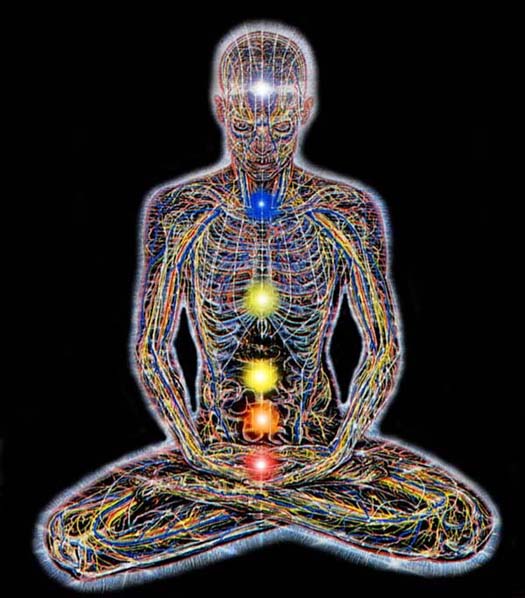
osture also being called chakrasana. A chakra is an energy center.. You have a few of them running up your spine. Each one is associated with different aspects of your being. Sometimes you are really open and your chakras are really clear, but usually, you have some sort of issue in one or another (we're only human, right?). So you could imagine that in this back bend, all the chakras are opening up like huge pours. But imagine that the chakras are clogged and that was me today feeling them getting squeezed. But these are very difficult pimples. the kind that look like they are ready, but you couldn't get them just yet. Maybe tomorrow.I pulled up my mat and weaved through the other students who were practicing. I opened the door to the women's dressing room, which was completely dark. I rolled out my mat, rolled out my body and felt the tears welling up in my eyes. I wasn't in physical pain. Well, if we are human, than we are physical, and so I suppose that technically, all pain is physical pain, but this was not a pain that I would go to a chiropractor for. The feeling that you get in your throat when you're about to cry is what I felt in my back. A dull ache filled with water that you know you must release.
I wouldn't recommend ashtanga yoga to anyone. It is hard, it is painful. (I once read that David Swenson would never tell anyone to practice ashtanga, but that if people came for it, he would teach it. I didn't understand that until today.) It isn't about asanas or getting the perfect body. What happens is that you are given a pipe cleaner and a bunch of fun looking poses. So you do the poses and when you're not looking, the pipe cleaner goes about cleaning out any baggage you have stored in your body and in your mind. Sometimes you notice a little but don't really mind, sometimes you don't notice at all. But then there are those times that you wake up and realize that the poses were just a trick and now you are completely vulnerable and stuck in a posture and the pipe cleaner gets to reach all those places you don't ever want to face. Its like when you go to the doctor and they tell you to look the other way but you know the bastard is trying to give you a shot in the arm. Sometimes this practice is like volunteering for a bad trip on LSD.
Practice is really easy when you're not thinking. It is really easy on days when you are happy. On days you are not, those are the days when you need it the most. I think Sharath knows this. I think he can see what we are going through by the way we are inhabiting our bodies. That is the magic of ashtanga. You are doing the same thing every day, but every day your body is so completely different. Sharath has been back bending me almost every day for 2 months. He had to feel the massive change this week in my body.
You've seen those commercials about depression. There is that one "cymbalta" commercial where they talk about how depression hurts. "Depression hurts, cymbalta can help". It is true. Our bodies store different emotions.
Many yoga teachers tell students that we store memories in our hips. But we store other things in other places. Int that Ashtanga Yoga: Practice and Philosophy book I told you about
a couple days ago, Maehle says that anger is stored in the hamstrings, extreme stiffness is because of mental rigidity, extreme flexibility is an inability to take a position in life and to set boundaries, and emotional pain is stored in the heart. (Symbol of heart chakra on right). The more you get into ashtanga, the more you'll hear about people crying in back bends. Maehle says that the emotional pain stored there leads to the crying. I thought of this as I sat on my mat with the dull ache of crying in my throat.
Maele writes:
"Since our body is our vehicle and the storehouse of our past, we want to practice asana to the point where it serves us well, while releasing and letting go of the past that is stored in it."
Sharath is right. Thinking makes back bending hard. Some days it is easy to let go of our thoughts. Other days I feel like I'm being dragged behind a carriage led by 12 horses. So what to do? "Practice, practice, all is coming."
It has been a long road. I recently published all of my blogs onto one platform. Since 2007 I have had 29 blogs. That’s close to 80...